
Ordinary Life After Ambition
Big BrotherThis flow traces Edison’s movement from fame-seeking and professional disappointment toward the possibility of ordinary pleasures, then tests whether that change can survive relapse.
increasing Bearing strength in each event
 decreasing
Bearing strength in each eventdecreasingFame as an Early Goal

Recognition Seems Necessary
A public family model
Edison grows up near a father who wants to be famous and becomes a young musician whose surname attracts attention. He imagines that being known by many people will confirm that he matters.
Pandora chooses another way
Pandora prefers anonymity and finds recognition uncomfortable. The siblings’ different desires show that the same family environment can produce opposite strategies for feeling significant.
Career Success Empties Out
A Narrowing Identity
Work without a future
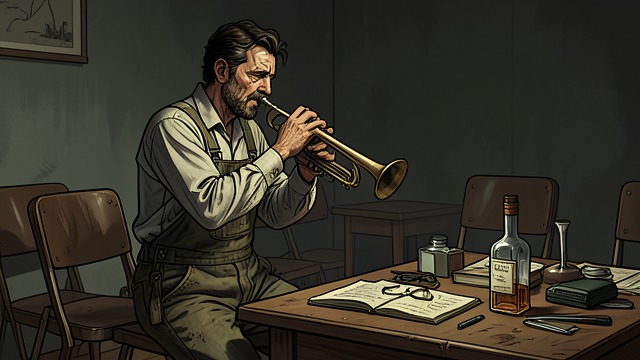
Edison still plays jazz, but increasingly low-paid gigs and a damaged reputation leave him far from the success he expects. He remains attached to the career while speaking as if a major opportunity is always just ahead.
Failure traps him
A small amount of work keeps him from abandoning the field, but does not restore his former momentum. The possibility of starting over becomes harder to imagine as his identity narrows to the musician he used to be.
Iowa Is Somewhere
A New Sense of Place
Familiarity replaces contempt
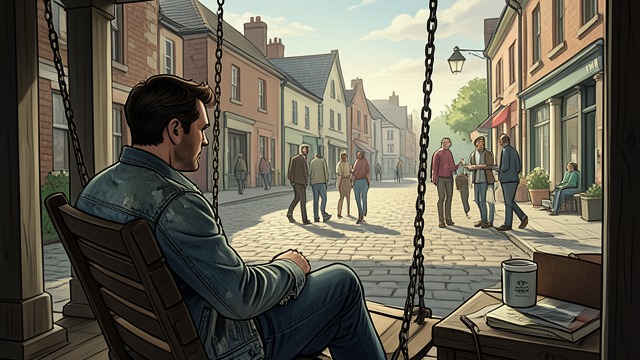
Edison gradually stops treating Iowa as a joke and begins enjoying its space, quiet, and unhurried conversations. He talks with neighbors and becomes part of community life.
Ordinary belonging
The change is not a return to fame but an acceptance of place and routine. Iowa offers Edison forms of companionship he had not valued when his identity depended on movement and public recognition.
Playing Without a Stage

Music Becomes Pleasure
The repertoire widens
Edison plays jazz, popular songs, standards, and show tunes for Pandora and Cody. He no longer uses every performance to advertise his career or list famous colleagues.
Attention shifts outward
As Edison listens more and talks less, playing becomes a way to share time rather than demand recognition. The change suggests a more sustainable relation to music, though it does not guarantee a permanent recovery.
The Ending Refuses Certainty

A Hopeful Life Is Invented
Pandora acknowledges the fantasy
The narrator admits that Edison never completed the imagined transformation and that she did not test whether ordinary life in Iowa could have changed him. The story’s hopeful details remain a construction.
Meaning without proof
Pandora still values the imagined music, work, community, and family reconciliation because they express what she wished for. The ending refuses to confuse emotional possibility with historical fact.
During Edison’s youth in Los Angeles
By Edison’s mid-forties
During the year at Prague Porches
During the latter months of the imagined recovery
In the final pages
